Tembeling Beach and Natural Pool
The Ultimate Guide to Tembeling Beach and Natural Pool: Discovering Nusa Penida’s Secret Jungle Oasis and Hidden Freshwater Springs
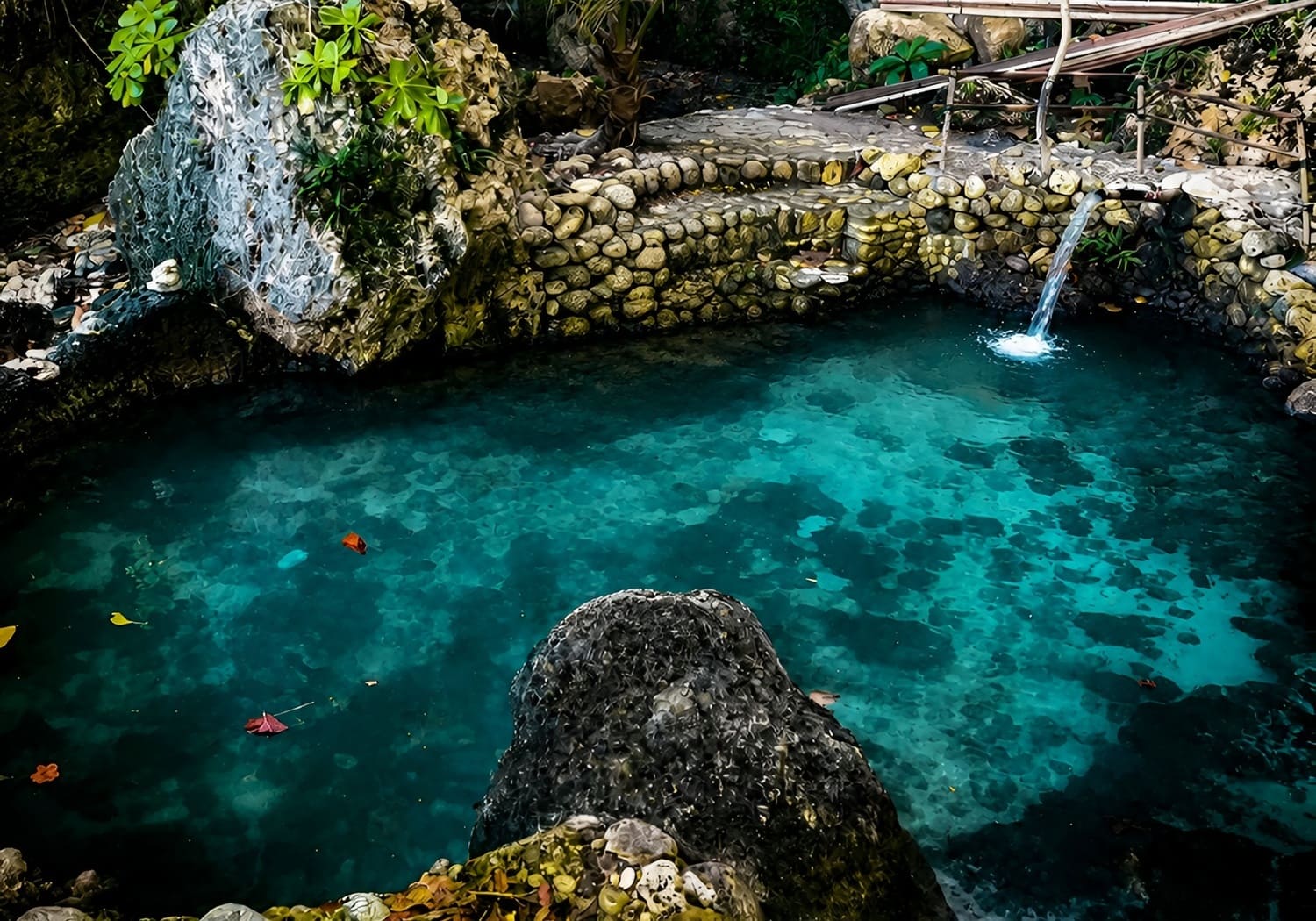
Tembeling Natural Pool
Deeply secluded within a raw, emerald chasm on the southwestern fringe of the island lies the ultimate hidden sanctuary of Nusa Penida: Tembeling Beach and Natural Pool. Far removed from the windswept heights of the island's famous clifftops, this pristine eco-paradise invites intrepid travelers to descend into an ancient, sun-dappled rainforest ravine where time seems to stand completely still. It is a mystical realm where sacred limestone caves, towering jungle canopies, and crystal-clear freshwater springs converge directly at the edge of a wild, wave-battered shoreline. For those willing to conquer the rugged journey to get here, Tembeling rewards the senses with an unforgettable immersion into the island’s most untouched, spiritual landscape.
If you visit Tembeling Beach and Natural Pool, here's what you need to know
- Overview of Tembeling Beach and Natural Pool
- The Exact Location of Tembeling Beach and Natural Pool
- The History and Meaning Behind the Name "Tembeling"
- Two Natural Wonders in One Spot: The Unique Layout of Tembeling Beach and Pools
- How To Get To Tembeling Beach and Natural Pool
- Tembeling Beach and Natural Pool Opening Hours
- Best Time to Visit Tembeling Beach and Natural Pool
- Ditch the Rough Roads: Let Our Expert Drivers Take You to Tembeling and Banah
Overview of Tembeling Beach and Natural Pool
Tucked deeply away within a protected conservation canyon, the natural pool Tembeling and its cloaked shoreline reveal an untouched oasis on the island’s rugged southwestern edge. Providing a starkly contrasting microclimate to the island's sun-scorched, windswept promontories, this peaceful sanctuary is famous for its dense, ancient rainforest canopy, mystical local grottos, and a beautifully isolated pebble beach. Resting in this emerald hollow grants you the chance to wash off the dust, plunge into translucent freshwater aquifers, and connect with a serene facet of Nusa Penida that remains unseen by the vast majority of mainstream travelers.
The Exact Location of Tembeling Beach and Natural Pool
Tembeling Beach and Natural Pool is secretly nestled on the remote, wave-beattered southwestern coastline of Nusa Penida Island, falling under the administrative jurisdiction of the Batumadeg Village area within the Klungkung Regency of Bali 80771, Indonesia. This pristine eco-sanctuary is hidden deep inside a dense, limestone forest ravine along the island's quieter and less commercialized southern tourist route. Geographically, it occupies an isolated position on the rugged coastal map, situated just a short distance southeast of the towering heights of Banah Cliff Point, where the island's dramatic landmass slopes down into a heavily protected jungle canyon before meeting the open Indian Ocean.
The History and Meaning Behind the Name "Tembeling"
The name Tembeling—which locals often write as Temeling—comes from an old Nusa Penida story about a pregnant village woman who was searching for water during a terrible island drought. While walking through the thick, untouched jungle, she accidentally found a hidden stream bursting out from the limestone rocks, which saved her village and created the beautiful freshwater pools you see today.
Long before international tourists discovered this hidden canyon, it was used as a deeply sacred spiritual site by local Balinese Hindus. The freshwater pools are treated as holy purification zones where locals still go to perform cleansing rituals among the ancient banyan trees and mossy stone shrines. Because the area holds such a high spiritual value, the local community has strictly protected the surrounding forest, keeping its wild, natural jungle atmosphere completely safe from big modern buildings and hotels.
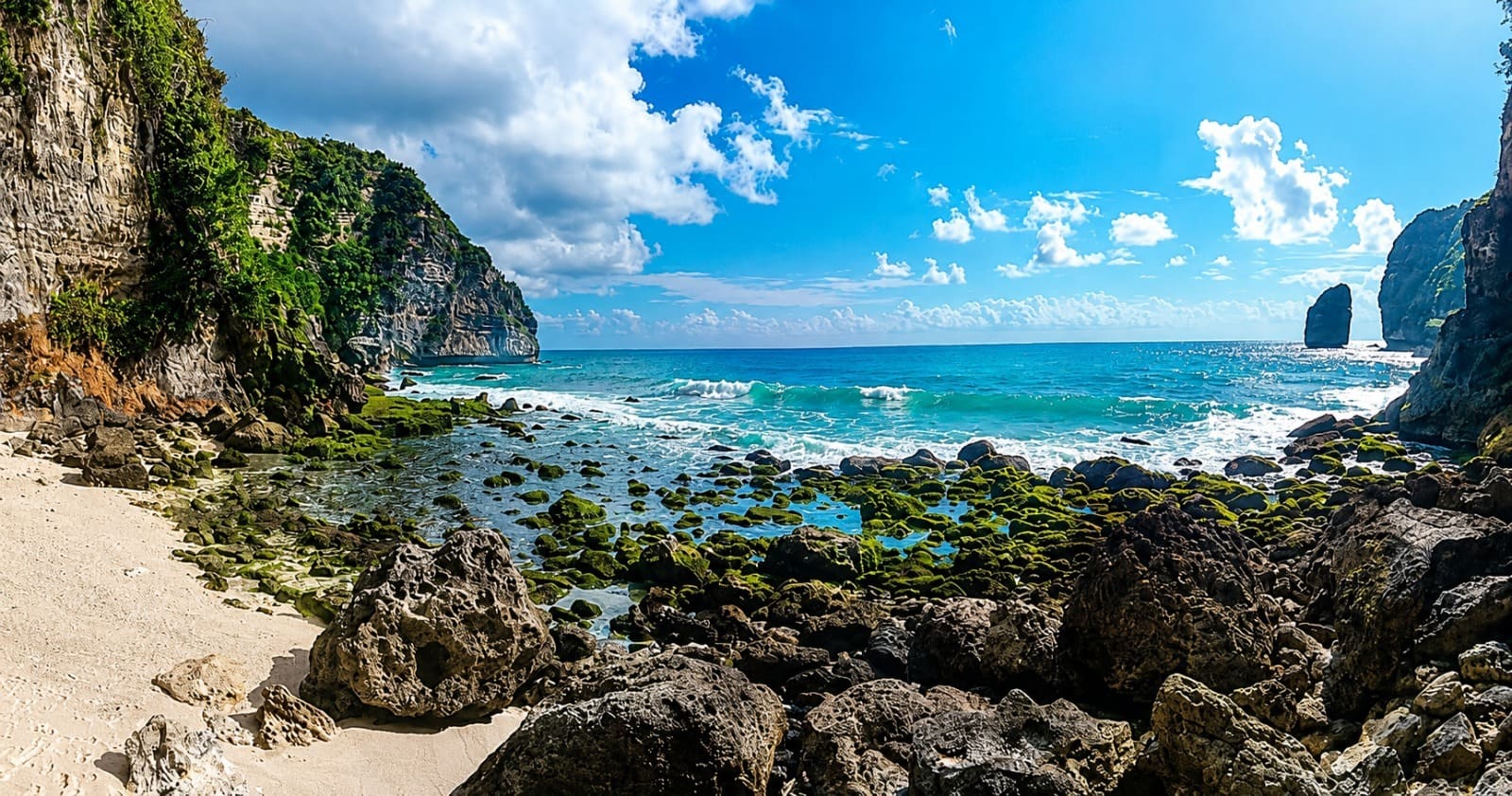
Tembeling Beach (Rocky Beach)
Two Natural Wonders in One Spot: The Unique Layout of Tembeling Beach and Pools
Tembeling Beach and Natural Pool is a hidden eco-sanctuary where a wild beach and clear freshwater pools exist together inside the exact same jungle ravine. Located on the quiet southwestern coast of Nusa Penida, this unique destination lets you experience two completely different natural worlds in one single spot. On one side, you are surrounded by a quiet, shady rainforest filled with ancient trees and two refreshing swimming pools fed by natural cliff springs. Just a few steps away through a rocky cave tunnel, the forest opens up to a raw, windswept coastline where massive ocean waves crash against a secluded stone beach. It is a rare paradise where you can relax in calm, icy-cold freshwater while listening to the roaring power of the open Indian Ocean right next to you.
- Tembeling Beach is a raw, windswept coastline hidden at the very bottom of a deep limestone ravine on the quiet southwestern edge of Nusa Penida. Completely cut off from the rest of the island, this secluded beach is reached by walking through a spectacular, shadow-filled cliff cave that acts as a natural stone gateway to the ocean. Once you step out of the dark tunnel, you are greeted by an untouched shoreline covered in smooth pebbles and large rocky boulders, surrounded by towering, vertical jungle cliffs that lock the beach away from the outside world.
Because it faces the open Indian Ocean, the water here is incredibly wild, featuring powerful riptides and massive waves that crash violently against the sharp coral reefs. While these dangerous currents make swimming in the sea strictly impossible, the beach itself has a deeply peaceful and spiritual atmosphere. The entire shoreline is beautifully decorated with hundreds of delicate stone-stacking towers built by passing travelers and local Hindu pilgrims, making it a perfect, quiet sanctuary to sit and listen to the roaring power of the ocean. - Tembeling Natural Pool is a hidden freshwater oasis cradled deep inside a shaded, vertical limestone ravine on the remote southwestern coast of Nusa Penida. This unique destination features two separate, crystal-clear swimming basins that are continuously fed by cool, ancient underground springs flowing directly out of the jungle cliff walls. The primary upper pool is deep and safely enclosed by towering rock faces draped in wild tropical vines, creating a calm, emerald-tinted swimming hole where adventurous travelers can jump straight from the natural stone ledges into the refreshing water.
Just a short walk down a set of mossy stairs sits the secondary natural pool, which rests dramatically right on the edge of the coastline. This smaller, shallower basin offers a spectacular contrast of natural elements, allowing visitors to float peacefully in completely still, icy-cold freshwater while watching massive ocean waves break against the rocky sea barriers just a few feet away. Shaded by a dense canopy of old-growth banyan trees, the entire pool area maintains a cool, mystical atmosphere that feels entirely isolated from the sun-scorched heat of the island's upper clifftops.
How To Get To Tembeling Beach and Natural Pool
To reach the hidden sanctuary of Tembeling Beach and Natural Pool, you must travel to the remote southwestern coast of Nusa Penida Island, which requires a combination of an ocean crossing and a rugged overland journey
- Step 1: Boarding the Fast Boat Crossing from Mainland Bali to Nusa Penida Island: Your tropical expedition kicks off at the bustling Sanur Harbor located in southeast Bali, where you will check in and board a modern, high-speed boat bound for Toya Pakeh Harbor in Nusa Penida. The ocean transit cuts directly across the deep, rolling waters of the Badung Strait and typically takes anywhere between thirty-five and forty-five minutes depending on the morning sea conditions. Booking an early morning departure slot is highly recommended by travel experts because it ensures you beat the mid-day heat and secure maximum daylight hours to complete the long overland journey across the island.
- Step 2: Navigating the Winding Inland Highways to Batumadeg Village Outskirts: Once you step off the boat onto the shores of Toya Pakeh Harbor, you must immediately secure your local transportation because there is no public transit network operating anywhere on the island. Independent travelers generally choose to rent a automatic scooter for total freedom, while families and groups prefer hiring a comfortable private car complete with an experienced local driver. From the main harbor terminal, you will steer directly south, climbing deep into the island's steep, winding interior hills and driving for approximately forty-five to sixty minutes through scenic coconut plantations until you reach the remote farming outskirts of Batumadeg Village.
- Step 3: Conquering the Treacherous and Vertical Tembeling Jungle Descent: The final stretch of the journey requires you to turn off the main paved highway onto a notoriously narrow, unpaved jungle track that drops steeply through a deep limestone ravine all the way to the coastline. Driving a standard rental scooter down this treacherous, gravel-filled vertical slope is exceptionally dangerous and is strictly discouraged unless you are an elite rider with extensive experience navigating loose rocks. The safest and most rewarding alternative is to park your vehicle at the main upper village clearing and hire a local motorbike ojek rider to expertly guide you down the sharp switchbacks for a small fee, or you can choose to embark on a peaceful, forty-five-minute trek on foot beneath the deeply shaded rainforest canopy until you reach the freshwater pools.
Tembeling Beach and Natural Pool Opening Hours
Tembeling Beach and Natural Pool officially remains open twenty-four hours a day, seven days a week, as there are no formal gates, ticket booths, or locking barriers managed at the canyon entrance. This round-the-clock accessibility grants independent travelers absolute freedom to explore the lush jungle ravine whenever they please, though entering the deep conservation area is heavily restricted during the multi-day island wide holiday of Nyepi Day.
While the site is technically accessible at midnight or pre-dawn, local village community leaders strongly advise against visiting outside of daylight windows. Because the entire clifftop track and the steep limestone staircases completely lack artificial lighting, attempting to navigate the rugged, vertical terrain in pitch-black darkness poses extreme safety risks. To guarantee a safe and visually rewarding expedition, you should plan your arrival and departure within the standard daylight hours of 7:00 AM to 6:00 PM, ensuring you always have clear visibility while descending and ascending the jungle canyon.
Best Time to Visit Tembeling Beach and Natural Pool
The ultimate window to experience the true beauty of Tembeling Beach and Natural Pool is during the mid-morning, specifically between 8:00 AM and 11:30 AM. Arriving during these morning hours ensures that the high overhead sun hits the deep limestone ravine perfectly, illuminating the freshwater pools with a bright emerald glow while keeping the surrounding rainforest canopy comfortably cool. This timeframe also allows you to enjoy the natural spring basins in absolute peace, as the majority of island day-trippers do not descend into the canyon until the afternoon. Alternatively, if your primary goal is to relax on the hidden pebble beach, visiting during low tide is essential, because high tide causes massive open-ocean waves to completely submerge the shoreline, making it dangerous to step out of the cave tunnel.
Ditch the Rough Roads: Let Our Expert Drivers Take You to Tembeling and Banah
If you want to completely skip the stress of organizing boat tickets, navigating the rugged island traffic, and driving over rough unpaved roads, let us handle all the logistics for you. Our team at Bali Tour provides a seamless, all-inclusive package designed to take you straight to the hidden oasis of Tembeling and the dramatic heights of Banah Cliff Point without any of the hassle.
Our exclusive Bali West and South Nusa Penida Tour covers everything you need for the ultimate island escape, including return fast boat transfers, comfortable private AC transport, and an experienced local driver to navigate the tricky terrain safely. By booking this comprehensive day trip, you can just sit back, relax, and enjoy the breathtaking views of the majestic cliffside and the refreshing natural spring pools while we take care of every single detail from start to finish.
Frequently Asked Questions (FAQ) About Tembeling Beach and Natural Pool
Is there an entrance fee for Tembeling Beach and Natural Pool?
No, there is no official entrance fee required to access Tembeling Beach and Natural Pool. Admission operates purely on a voluntary donation system, where visitors can drop a small contribution at the village entrance checkpoint to help the local community maintain the jungle steps and forest paths.
Can you swim in the ocean at Tembeling Beach?
No, swimming in the ocean at Tembeling Beach is strictly prohibited and extremely dangerous due to violent open-ocean currents, sharp hidden reefs, and powerful riptides. All swimming, cliff-jumping, and bathing activities should be kept strictly within the safety of the two protected freshwater natural pools located right beside the beach.
How deep are the natural freshwater pools at Tembeling?
The main upper freshwater pool is quite deep, reaching depths of around 2 to 3 meters (6 to 10 feet) in the center, making it deep enough and perfectly safe for cliff jumping from the surrounding rock ledges. The lower coastal pool is much shallower, usually hovering around waist-deep, which makes it ideal for sitting down and relaxing in the fresh spring water.
How much does a local motorbike ojek cost at Tembeling?
If you choose not to drive your own scooter down the dangerous, steep road, local village riders wait at the top parking clearing to offer round-trip ojek (motorbike taxi) services. The standard fee generally ranges between IDR 100,000 and IDR 150,000 for a return trip, which includes the thrilling ride down through the ravine and the pickup to bring you back up to your car or scooter.
Are there any toilets, changing rooms, or restaurants at Tembeling?
Facilities inside the deep conservation ravine are incredibly primitive and limited. There are rudimentary, basic toilet blocks near the pools that visitors often use as changing rooms, but there are no proper restaurants or commercial stores. Occasionally, local residents set up a small makeshift stall selling cold bottles of water and snacks, but it is highly recommended to pack your own essentials just in case.