Banah Cliff Point Nusa Penida
The Ultimate Guide to Banah Cliff Point: Discovering Nusa Penida’s Secret Coastal Sanctuary and Off-the-Beaten-Path Views
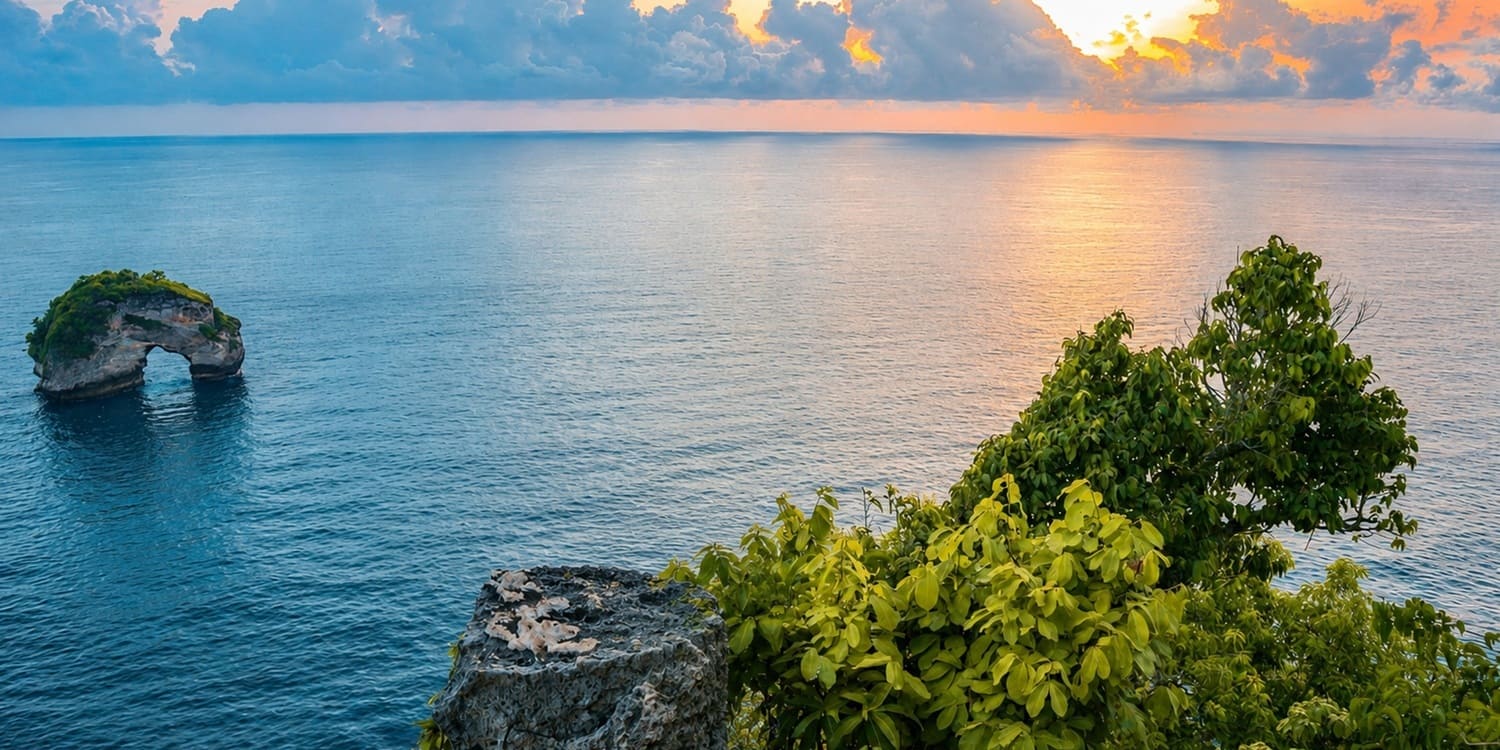
Banah Cliff Point is a colossal, wind-sculpted limestone theater guarding the untamed southwestern perimeter of Nusa Penida Island, Bali. While viral crowds jam the paths of Kelingking, Banah remains an untouched, raw frontier. It is defined by sheer vertical walls plunging hundreds of meters into a violent ocean, looking directly down upon a bizarre, freestanding rock donut that anchors the marine abyss below.
If you visit Banah Cliff Point, here's what you need to know
- Overview of Banah Cliff Point
- Exact Location of Banah Cliff Point
- The Etymological Origins of the Iconic Banah Cliff
- Unrivaled Coastal Phenomenons
- How To Get To Banah Cliff Point
- Opening Hours Banah Cliff Point
- Best Time to Visit Banah Cliff Point
- Skip the Hassle & Let Us Take You There!
Overview of Banah Cliff Point
Banah Cliff Point is a monumental, wind-swept limestone theater guarding the untamed southwestern perimeter of Nusa Penida Island, Bali. While viral crowds jam the paths of more mainstream lookouts, this raw frontier offers an untouched sanctuary defined by sheer vertical walls plunging hundreds of meters into a violent ocean. The dramatic viewpoint looks directly down upon a bizarre, freestanding rock donut known as Batu Bolong that anchors the marine abyss below, framing a cinematic, panoramic sweep where the monolithic coastal ridge tapers into the crashing surf.
Exact Location of Banah Cliff Point
Banah Cliff Point is a dramatic coastal vantage point secretly nestled on the remote, wave-battered southwestern coastline of Nusa Penida Island, which falls under the local administration of the Batumadeg Village area within the Klungkung Regency of Bali 80771, Indonesia. This magnificent limestone precipice sits directly along the island's significantly quieter and less commercialized southern tourist loop, offering a peaceful sanctuary far away from the chaotic northern crowds. Geographically, it occupies a highly strategic position on the rugged coastal map, where the massive white landmass drops straight down into deep blue waters, providing an isolated escape where travelers can witness the true, wild essence of the island's raw maritime borders.
The Etymological Origins of the Iconic Banah Cliff
The unique nomenclature of Banah Cliff stems from an ancient linguistic tapestry deeply intertwined with the physical geography of Nusa Penida's maritime frontier. Within the ancestral Balinese dialect spoken by the native islanders, the term "Banah" represents an archaic regional marker used by village elders to designate specific terrestrial borders and native coastal flora that originally blanketed the Batumadeg highlands.
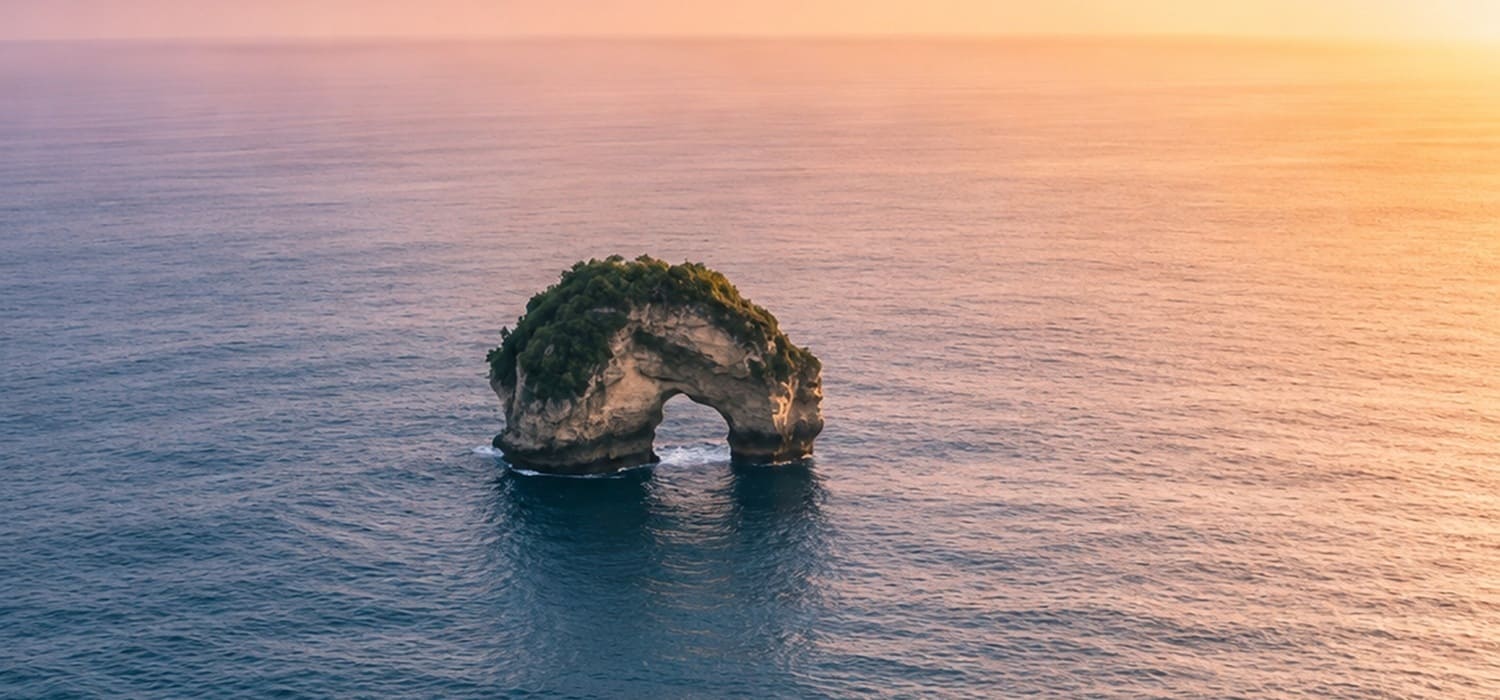
Locals intimately refer to this geological marvel as Banah Cliff Bolong. The modifier "Bolong" translates literally to "hollowed" or "perforated", acting as a direct, descriptive tribute to the colossal, donut-shaped limestone monolith anchored in the swirling currents below. As global explorers gradually mapped this secluded precipice, the native title fused with Western terminology to create the modern moniker Banah Cliff Point, forever anchoring an ancient geographical identifier into the lexicon of contemporary international travel.
Unrivaled Coastal Phenomenons
Banah Cliff Point stands as a masterclass in raw, wild geography, showcasing natural wonders that simply cannot be replicated anywhere else on Earth. The relentless power of the Indian Ocean crashing against the soft limestone has carved out a dramatic landscape of deep chasms, hidden marine habitats, and gravity-defying stone structures. This section of the coastline is not just a viewpoint; it is an active exhibition of nature’s colossal artistic power, offering visitors a front-row seat to rare geological marvels that remain completely untouched by commercial development.
- Batu Bolong (The Pierced Leviathan): This geological masterpiece dominates the offshore panorama, rising defiantly from the churning ocean currents like a ancient stone fortress. The colossal limestone monolith features a perfectly sculpted natural archway carved right through its center by centuries of relentless wave action. It forms a dramatic maritime gateway that frames the endless horizon, providing an unforgettable sight as waves explode violently through the hollow core.
- The Dual-Horizon Fork: Navigating the edge reveals a spectacular fork in the trail that splits the landscape into two distinctly breathless vantage points. The western pathway guides your eyes along the dramatic, undulating spine of the coast that eventually points toward the iconic silhouette of Kelingking. Meanwhile, turning toward the eastern path shifts your perspective entirely, positioning you directly over a sheer drop that overlooks the massive, shadows-filled vertical chasm.
- The High-Altitude Manta Sanctuary: The breathtaking verticality of this specific cliff face turns the edge into a premium, natural sky-deck for watching marine life thrive. Thanks to the exceptional clarity of the turquoise water pooling below, patient travelers can easily look past the surface ripples to spot massive shadows moving gracefully. These are the giant manta rays of Nusa Penida, effortlessly patrolling the deep coral reef systems directly beneath your feet.
- The Solitary Golden Hour: As late afternoon approaches, the entire cliffside transforms into an intimate amphitheater completely disconnected from the commercialized tourist trail. Without the disturbance of noisy crowds, selfie-stick lines, or concrete viewing platforms, you can experience a raw, deeply spiritual tropical sundown. The sun sinks directly into the open Indian Ocean, painting the limestone walls in rich shades of orange, gold, and deep purple.
How To Get To Banah Cliff Point
To reach the dramatic heights of Banah Cliff Point, travelers must journey from mainland Bali over to the south-western coast of Nusa Penida Island. The entire transit requires a mix of ocean travel and an adventurous road trip through the island’s elevated interior.
- Step 1: Crossing from Mainland Bali to Nusa Penida: Depart from Sanur Harbor in southeast Bali on a modern speed boat bound for Toya Pakeh Harbor in Nusa Penida. The ocean crossing across the Badung Strait takes approximately thirty-five to forty-five minutes. Booking a morning departure slot is highly recommended to maximize your daylight adventure time.
- Step 2: Navigating the Inland Roads to Batumadeg Village: Secure local transportation at Toya Pakeh Harbor by either renting a scooter or hiring a private car with a local driver. Steer south into the island's steep, winding interior hills for a forty-five to sixty-minute drive. Follow the route until you reach the remote farming outskirts of Batumadeg Village.
- Step 3: Conquering the Final Unpaved Track: Turn off the main paved highway onto the final narrow gravel trail leading directly to the coastline. Navigate the rough terrain of loose limestone rocks and deep potholes with extreme caution if riding a scooter. Park your vehicle at the jungle clearing fork and walk the remaining quarter-mile if the unmapped track becomes too challenging to drive.
Opening Hours Banah Cliff Point
The majestic coastal precipice of Banah Cliff Point technically remains open to the public twenty-four hours a day, seven days a week, as there are no formal gates, ticket booths, or restrictive operating schedules managed at the site. This round-the-clock accessibility grants independent adventurers total freedom to explore the wild landscape whenever they please, though attempting to navigate the area after dusk is highly discouraged by locals. Because the entire clifftop completely lacks artificial lighting and sits over raw, crumbling limestone terrain with zero safety fences or barricades, exploring the edge in pitch-black darkness poses extreme safety risks over the unprotected drops.
Best Time to Visit Banah Cliff Point
The ultimate window to experience the true beauty of the cliffside is during the late afternoon from three thirty until six fifteen in the evening, right as the tropical sun begins its descent toward the open horizon. Arriving during this magical golden hour slot transforms the landscape into an intimate amphitheater, casting warm amber and deep violet hues across the rugged rock faces and the iconic hollow rock archway without the disturbance of noisy selfie lines. Alternatively, if your primary goal is to spot the giant manta rays swimming below, visiting during the midday slot between ten in the morning and two in the afternoon is ideal, as the overhead sun penetrates deep into the clear turquoise depths to offer the highest vertical water clarity.
Skip the Hassle & Let Us Take You There!
If you want to completely skip the stress of organizing boat tickets, navigating the rugged island traffic, and driving over rough unpaved roads, let us handle all the logistics for you. Our team at Bali Tour provides a seamless, all-inclusive package designed to take you straight to Banah Cliff without any of the hassle.
Our exclusive Bali West and South Nusa Penida Tour covers everything you need for the ultimate island escape, including return fast boat transfers, comfortable private AC transport, and an experienced local driver to navigate the tricky terrain. By booking this comprehensive day trip, you can just sit back, relax, and enjoy the breathtaking views of the majestic cliffside while we take care of every single detail from start to finish
Frequently Asked Questions (FAQ) About Banah Cliff Point
Is there an entrance fee for Banah Cliff Point?
No, entering Banah Cliff Point is completely free of charge. There are no official ticket booths or entrance fees managed at the site, though local community keepers may occasionally collect a small voluntary parking donation to help maintain the raw island trails.
Can you swim at Banah Cliff Point?
No, swimming is strictly impossible at Banah Cliff Point. The destination is a high-altitude cliff viewpoint towering hundreds of meters above the ocean with no physical path or stairs leading down to the water, meaning you can only observe the sea and marine life from the clifftop safely.
How do you spot manta rays from the clifftop?
Spotting giant manta rays requires visiting the edge during midday when the sun shines directly overhead into the ocean. Because the water below the sheer limestone cliffs is exceptionally clear, you can easily look past the surface waves to spot massive, dark diamond-shaped shadows gliding gracefully over the coral reef beds.
Is the road to Banah Cliff Point safe for scooters?
The final mile branching off the main paved highway consists of a narrow, unmapped gravel track filled with deep potholes and loose limestone rocks. While experienced scooter riders can navigate the terrain safely by maintaining a slow pace and braking gently, beginners should hire a private car with a local driver or walk the final stretch to avoid accidents.
Are there any restaurants or facilities at the viewpoint?
No, the clifftop remains entirely wild and undeveloped with zero commercial infrastructure, built-in restrooms, or permanent restaurants. It is highly recommended to pack all your own drinking water, snacks, and sun protection before leaving your hotel, as you will only occasionally find a local resident selling bottled drinks near the parking area.