Bali Kecak Dance Show
Complete Guide to the Traditional Bali Kecak and Fire Dance
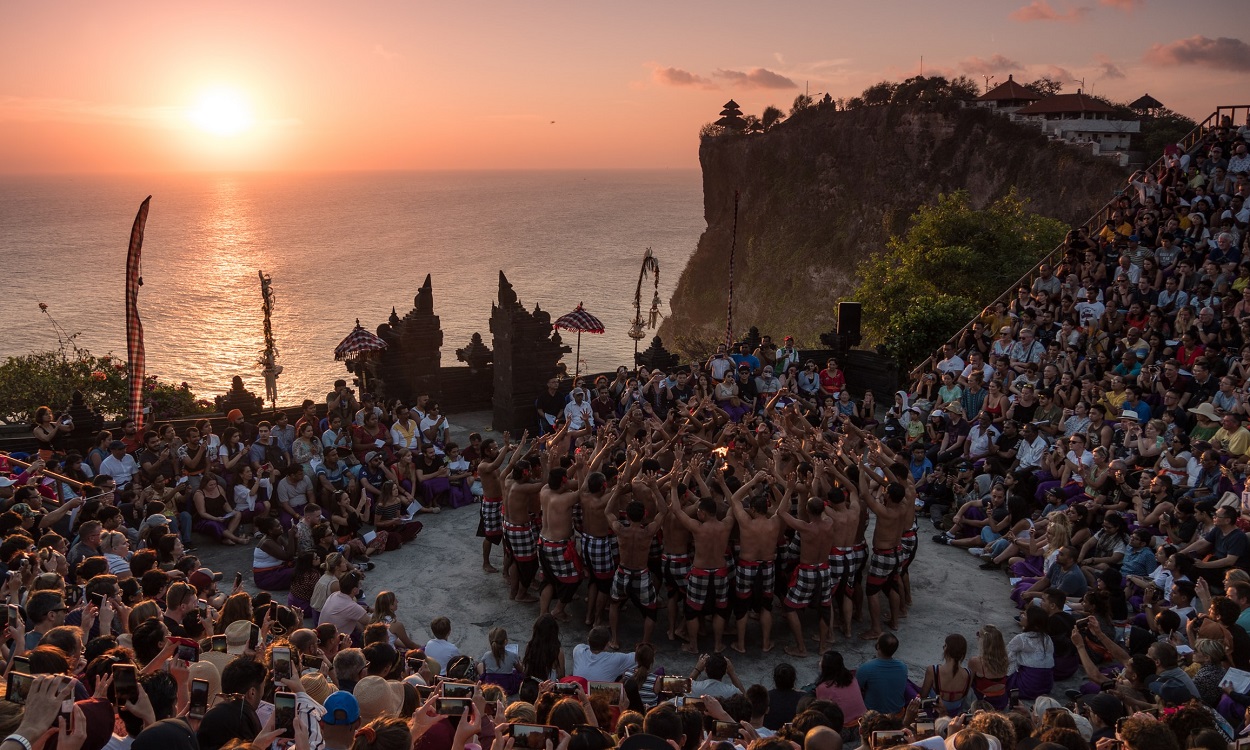
The Bali Kecak Dance Show is one of the island's most iconic cultural highlights, mesmerizing audiences with its intense vocal rhythms, dramatic fire choreography, and ancient storytelling. While it is not known exactly where the Kecak Dance first originated, historians generally agree that it was developed into a formal performing art in the early 1930s within Bona Village, Gianyar. Originally, the rhythmic chanting of the Kecak and Fire Dance was not a theatrical show, but a sacred vocal melody used to accompany the mystical Sanghyang trance dance. Because of its spiritual nature, this intense vocal ritual could only be staged inside sacred Balinese temple compounds.
Visionary local artists transformed the ritual by weaving in the epic story of the Ramayana. By using this legendary tale as a substitute for the Sanghyang dance, they allowed the art form to transition smoothly so this incredible Bali Kecak Show could eventually be displayed in public as a commercial performance art. The primary section of the Ramayana story depicted in the modern Kecak and Fire Dance follows the dramatic abduction of Goddess Sita by the demon King Ravana, creating a thrilling theatrical experience that highlights the eternal battle between good and evil.
All you need to know about Kecak and Fire Dance
- Kecak and Fire Dance Location
- The Development of Kecak Dance in Bali
- Pattern of Kecak and Fire Dance
- Kecak and Fire Dance Performance Story
- Essential Tips for Attending a Bali Kecak Show
- How To Watch The Kecak and Fire Dance
Kecak and Fire Dance Location
Theater venues for the Kecak and Fire Dance are strategically located across the island's most popular resort areas. Because these cultural shows only start in the late afternoon or early evening, you can easily find a performance theater near your hotel to minimize your travel time. The most popular venues to watch the Kecak Dance in Bali include:
- Ubud: Located in the cultural heart of Bali at Pura Dalem Taman Kaja (Jl. Sri Wedari No.12, Ubud). The show runs from 19:00 to 20:00, utilizing an intimate temple courtyard to showcase the story of Hanuman helping Rama free Sita.
- Tanah Lot: Set against the sweeping oceanside views of the iconic cliffside temple in Tabanan. The performance runs from 18:00 to 19:00, allowing you to enjoy the Kecak and Fire Dance directly alongside a spectacular Balinese sunset.
- Uluwatu: The most famous and popular open-air amphitheater, perched on the cliffside right next to Uluwatu Temple. Due to massive tourist demand, this theater offers two sunset sessions: Session 1 from 18:00 to 19:00, and Session 2 from 19:00 to 20:00.
- Melasti Beach: A spectacular beachfront cultural amphitheater located in the Nusa Dua area. The show runs from 18:00 to 19:00, offering a premium seaside atmosphere where the fire performance blends beautifully with the crashing ocean waves

Kecak and Fire Dance in Ubud
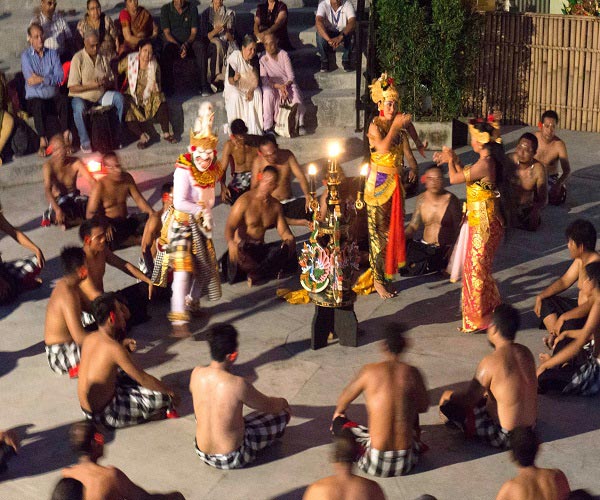
Kecak and Fire Dance in Tanah Lot

Kecak and Fire Dance in Uluwatu
The Development of Kecak Dance in Bali
Since the 1970s, the Kecak Dance in Bali has experienced incredible growth in terms of storyline depth, theatrical staging, and grand scale. Performance groups are no longer confined to Bona Village; today, dozens of active Kecak troupes thrive across almost every regency in Bali, with performers heavily drawing from the local village Banjar (community councils). The cultural importance of the dance is celebrated frequently through massive island-wide festivals organized by art academies and the Balinese government.
The scale of the Bali Kecak Show has broken numerous world records over the decades. In 1979, a historic performance featured 500 dancers staging a massive adaptation of the Mahabharata epic. This milestone was later broken on September 29, 2006, at Tanah Lot, when the Tabanan regency government organized a colossal, world-record-breaking Kecak performance featuring over 5,000 continuous dancers simultaneously on the rocky coastline. This incredible scale proves that traditional Balinese performing arts remain in massive demand by global travelers.
Pattern of Kecak and Fire Dance
What makes the Kecak and Fire Dance completely unique compared to other traditional Balinese art forms is that it relies entirely on a human vocal orchestra, known locally as the Gamelan Suara. Instead of using metallic bronze percussion instruments, the captivating music is generated live by a choir of 50 to 70 bare-chested men sitting in tight concentric circles. This specialized vocal group performs a complex, interlocking a cappella chant, swaying rhythmically, standing, and falling prone to mirror the unfolding drama.
The vocal structure of the Bali Kecak Show relies on an organized hierarchy of specialist roles:
- The Chanted Choir: A large circle of men providing the continuous "cak-cak-cak" vocal base rhythm.
- The Leader: A solo performer responsible for setting the initial tone, pitch, and speed of the chant.
- The Suppressor: A vocalist in charge of controlling the high and low-pitch vocal accents.
- The Solo Soloist: A melodic singer who provides emotional vocal overlays during dramatic scenes.
- The Mastermind (Dalang): The narrator who calls out the storyline and contextualizes the character movements.
Because the choreography relies entirely on the fluid vocal mix rather than a rigid gamelan beat, the Kecak Dance allows for more relaxed, expressive, and improvisational movements. Modern troupes regularly blend high-intensity fire choreography with lighthearted comedic timing, ensuring the performance remains highly entertaining and engaging for international audiences throughout the entire hour.
Bali Kecak and Fire Dance Performance Story
What makes the Bali Kecak Dance Show truly unique is that the accompanying music is provided entirely by the human voice, known as the Gamelan Suara. A choir of one hundred men or more sit in close concentric circles, swaying, standing up, and lying prone as the complex plot develops. Amidst the moving chorus, the deep voices of the narrators can be heard telling the unfolding tale.
The story is a famous dramatic fragment from the Ramayana, the ancient Hindu epic which finds artistic expression across Indonesia in dance, painting, and stone carvings. Prince Rama, the rightful heir to the throne of the Ayodhya Kingdom, and his beautiful wife, Goddess Sita, have been unjustly banished from the kingdom by King Dasarata due to the political trickery of Rama's stepmother. The performance begins as Prince Rama, Sita, and Rama's loyal brother, Prince Laksmana, arrive to navigate the deep wilderness of the Dandaka Forest.
The Abduction of Goddess Sita
The traveling trio is soon observed from the shadows by the multi-headed demon King Rahwana (Ravana), the ruler of Alengka, who deeply lusts after the beautiful Sita. To isolate her, Rahwana commands his magical prime minister, Marica, to create a distraction. Using sorcery, Marica transforms into an enchanting golden deer. When Sita spots the creature, she is so completely enchanted that she begs Rama to capture it for her. Rama chases the deer deep into the forest, leaving Laksmana behind with strict instructions to protect Sita at all costs.
Soon after, a magical trick voice echoes through the trees, mimicking Rama crying out in mortal agony. Fearing for her husband's life, a panicked Sita forces Laksmana to leave her side by accusing him of cowardice. Before rushing off to assist his brother, Laksmana uses his blade to draw a protective magic circle on the ground, warning Sita that she must not under any circumstance step outside its boundary.
Left alone in the forest, Sita falls prey to the clever trickery of Rahwana, who disguises himself as an old, frail priest begging for food. Breaking the boundary of the magic circle to give the hungry priest some food, Sita is immediately grabbed by Rahwana and carried away to his palace in Alengka.
Hanuman's Rescue Mission
Once inside the fortress of Alengka, Rahwana tries everything to seduce Sita, but she fiercely resists his advances. Mourning her cruel fate, Sita pours her heart out to Rahwana's sympathetic niece, Trijata. Suddenly, the white monkey warrior Hanuman appears in the palace gardens. He reveals himself as Rama’s divine envoy, proving his identity by presenting Rama's royal ring to her. Overjoyed, Sita gives Hanuman a personal hairpin to show she is still alive and sends him back with an urgent message for Rama to come to her rescue.
Meanwhile, Rama and Laksmana are wandering the wilderness searching for Sita when they are ambushed by Meganada, Rahwana's powerful son. Engaging the brothers in an intense battle, Meganada unleashes a magical arrow that transforms into a binding dragon, overpowering the brothers and trapping them in heavy ropes. High above in the sky, the mythical bird Garuda—the King of Birds and a close friend of King Dasarata—witnesses the trouble. Garuda dives down to the rescue, using his sharp beak to free the brothers from the binding ropes.
Rama and Laksmana continue their urgent quest to rescue Sita, soon joining forces with Sugriwa, the King of the Monkeys, and his massive monkey army. This thrilling fragment of the Ramayana reaches its spectacular climax with a massive battle between Sugriwa’s monkey warriors and Meganada’s fierce demon army, ending in the total defeat of the demon forces.
Essential Tips for Attending a Bali Kecak Show
To ensure a smooth and respectful experience while watching the Kecak and Fire Dance inside or near sacred temple compounds, keep the following practical tips in mind:
- Dress Code Requirements: Because most popular performance theaters are located on or near sacred temple grounds (like Uluwatu and Tanah Lot), visitors must dress modestly. You are required to cover your knees and shoulders. Most venues provide a traditional sarong and sash at the entrance if you do not have your own.
- Arrive Early for Seating: Open-air amphitheaters, especially the world-famous cliffside venue in Uluwatu, are incredibly popular. It is highly recommended to arrive at the theater venue at least 45 to 60 minutes before the 18:00 showtime to secure a great seat with an unobstructed sunset view.
- Prepare for Open-Air Elements: The performance takes place outdoors during sunset. Bringing sunglasses, sunscreen for the early arrival hours, a bottle of mineral water, and eco-friendly insect repellent will keep you comfortable throughout the one-hour performance.
- Watch for Local Wildlife: At locations like the Uluwatu Temple theater, wild macaque monkeys roam freely around the grounds. Keep a secure hold on your loose personal belongings, including sunglasses, hats, smartphones, and cameras.
How To Watch The Kecak and Fire Dance
The Kecak and Fire Dance is a traditional performance staged exclusively in the late afternoon and early evening. The dramatic atmosphere is created live by dozens of continuous performers chanting rhythmic "cak" sounds in tandem, building a loud, beautiful, and mesmerizing vocal harmony. If you plan to watch the Kecak Dance, you can easily visit an open-air theater located near your hotel to save on travel times.
For travelers who want to combine this cultural show with a spectacular sunset view, looking into a customized afternoon route is highly recommended. A popular way to experience this is through an organized afternoon excursion to Uluwatu Temple, can take this Half Day Uluwatu Sunset Tour. This route allows you to admire the panoramic cliffside views and ancient temple architecture before taking your seat at the open-air theater, where the show begins right at 18:00. This timing allows you to watch the fiery performance conclude just as the sun sets over the Indian Ocean. After the performance concludes, visitors can easily head down to the nearby shores of Jimbaran Beach to enjoy a fresh seafood dinner on the sand, wrapping up an unforgettable and impressive cultural day in Bali.
FAQs: Bali Kecak and Fire Dance Show
What time does the Bali Kecak Show start?
Uluwatu Kecak Show features two daily performance sessions starting at 18:00 (6:00 PM) and 19:00 (7:00 PM). All other coastal sunset venues host only one session per day at 18:00 (6:00 PM).
How long does a Kecak and Fire Dance performance last?
A standard traditional performance runs for a full duration of exactly 1 hour. Shows starting at 18:00 wrap up by 19:00, while evening shows in Ubud conclude by 20:00.
Is there a strict dress code for watching the Kecak Dance?
Yes, because the premier open-air theaters sit near or within sacred Hindu temple grounds, visitors must cover their shoulders and knees. Most temple venues provide a complimentary traditional sarong at the entrance.
Is the Bali Kecak Show suitable for children?
Yes, the performance is a fantastic, engaging cultural activity for families. The powerful live vocal chanting, vibrant traditional costumes, playful comedy from the monkey army, and thrilling fire finale hold the attention of all ages.
Why is there no musical instrument or gamelan in the Kecak Dance?
Unlike other traditional Balinese dances, the Kecak Dance relies entirely on a human vocal orchestra known as the Gamelan Suara. The captivating soundtrack is created completely a cappella by a live choir of 50 to 70 bare-chested men chanting interlocking rhythms.
Can I take photos and videos during the performance?
Yes, non-professional photography and videography are fully permitted during the show. Visitors are welcome to capture memories of the dramatic fire choreography and sunset backdrops, though camera flashes should remain turned off after dark.