Uluwatu Temple
Ultimate Guide to Bali Uluwatu Temple: Historic Cliffside Shrine & Famous Sunset View
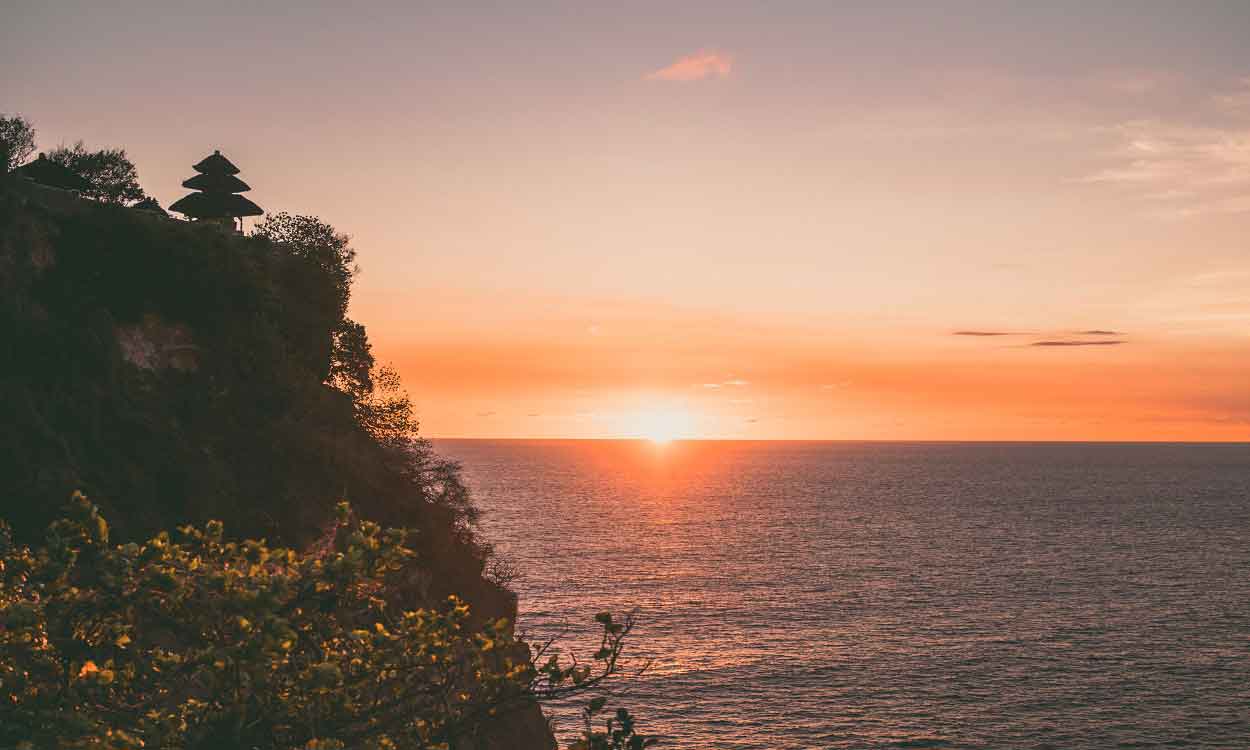
The Bali Uluwatu Temple is an exceptional cultural landmark and a premier place of interest located in Pecatu Village, Kuta South Sub-district, Badung Regency. Situated approximately 30 kilometers south of Denpasar City, this magnificent coastal shrine sits in a highly strategic position at the southernmost tip of the Bukit Peninsula. Locally revered as Pura Luhur Uluwatu, this sacred site stands proudly as one of the six Sad Kahyangan temples, which serve as the foundational spiritual pillars protecting the entire island from evil spirits. As one of the most celebrated tourist attractions in the region, thousands of international travelers visit daily to admire the breathtaking panoramic views of the open ocean against the backdrop of this ancient, holy monument.
Perched dramatically on the coastline, Uluwatu Temple has earned global fame for its majestic atmosphere and unmatched natural beauty. For visitors who love chasing the perfect twilight horizon, this cliffside destination offers an unparalleled vantage point to witness the sun sink directly into the sea. The sweeping, unobstructed views over the vast expanse of the Indian Ocean create a deeply phenomenal setting. Taking a quiet moment to sit along the cliffside pathway and watch the sky change colors over this ancient sacred space is an essential island experience that captures the true spiritual essence of a classic vacation.
All you need to know about Uluwatu Temple
- Getting There and Travel Logistics
- The Magical Uluwatu Sunset Experience
- Top Highlights of the Uluwatu Cliff Temple
- Ancient History and Architectural Origins
- Spatial Layout and Unique Structural Features
- Sacred Ceremonies and Spiritual Significance
- On-Site Visitor Amenities
- Essential Travel Tips for Visitors
- The Cliffside Kecak and Fire Dance Performance
- Cultural Etiquette and Sacred Dress Code
- Coastal Wildlife and Resident Long-Tailed Macaques
- Practical Primate Safety Guidelines
- Curated Afternoon Excursions and Final Thoughts
Getting There and Travel Logistics
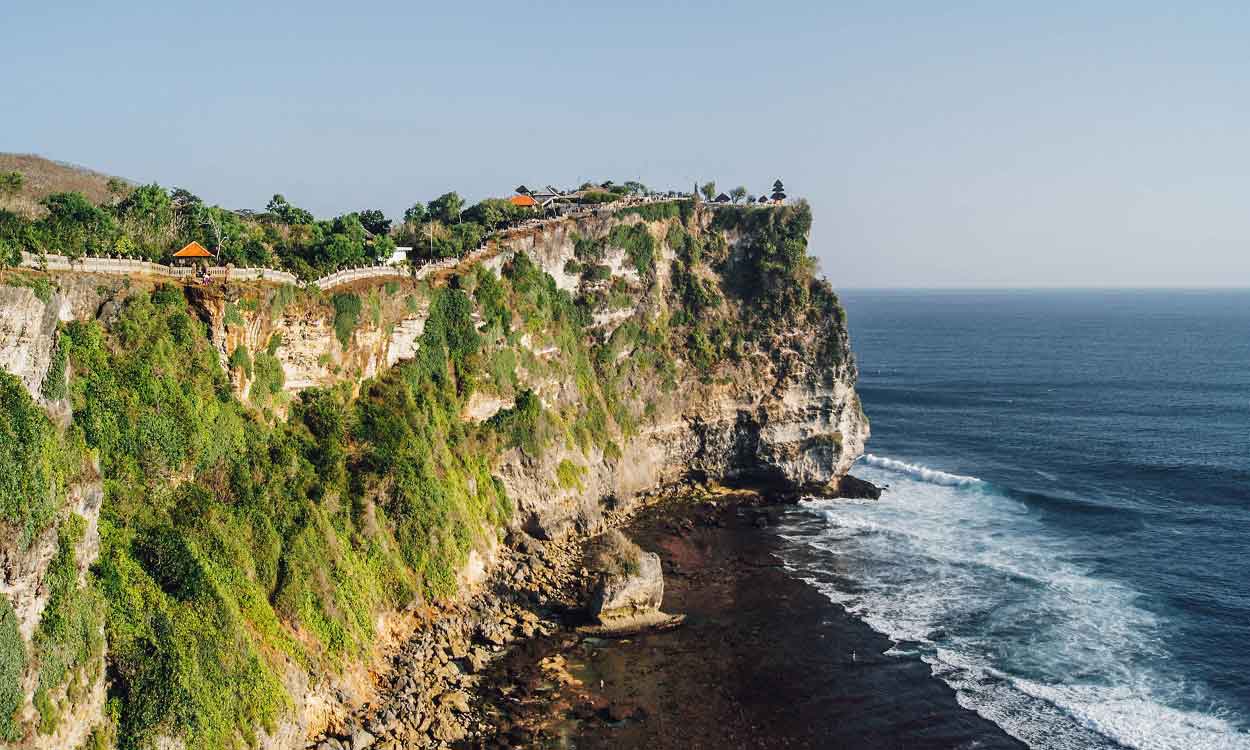
The majestic Uluwatu Temple sits on the southwestern tip of the Bukit Peninsula within Pecatu Village, South Kuta, Badung Regency. This sacred sanctuary occupies a dramatic limestone cliffside, rising 79 meters over the Indian Ocean. The route to the complex wind through scenic, rolling hills with vast views of the surrounding coast.Traveling from the Kuta beach area takes approximately 60 minutes by car. Because this landmark is exceptionally popular, paths remain busy with visitors daily. Independent travelers can navigate easily using navigation apps, though booking a private transport service offers a smooth journey directly to the spectacular Uluwatu Sunset viewpoint.
The Magical Uluwatu Sunset Experience
Witnessing an Uluwatu Sunset is widely regarded as a signature highlight of any South Bali itinerary. Because the temple grounds stand completely unobstructed on a soaring cliffside, the location offers a massive, wide-angle view of the horizon that cannot be replicated anywhere else on earth. Watching the bright afternoon sun slowly descend, casting a warm reddish light across the sky and reflecting over the crashing waves below, creates a deeply romantic atmosphere. It is the perfect setting to share a quiet, memorable evening with a travel partner while marveling at the incredible scale of the natural landscape.
The magical transition from day to night follows a reliable seasonal timeline that travelers can easily plan for:
- Peak Sunset Window: The sunset path typically begins around 18:15 and concludes by 18:30, providing about 15 minutes of vibrant color changes.
- Weather Variations: The exact timing and sky color can shift slightly depending on seasonal weather patterns and cloud density.
- The Twilight Glow: Even after the sun dips below the horizon, the sky retains a brilliant, vivid reddish-purple glow that beautifully illuminates the temple silhouette.
Top Highlights of the Uluwatu Cliff Temple
Exploring the Uluwatu Cliff Temple reveals a fantastic combination of ancient architecture, coastal wildlife, and traditional performing arts. The entire complex is linked by a continuous stone pathway that allows visitors to explore different sections safely. The main highlights to look out for during your visit include:
- The 70-Meter Cliffside Walk: The temple structures are uniquely built right on the edge of a rugged limestone cliff dropping 70 meters straight down into the swirling blue ocean, creating a jaw-dropping background for travel photos.
- The Sacred Monkey Forest: A dense, green forest wraps around the front of the complex, serving as a sanctuary for hundreds of native macaque monkeys. While these wild residents are fed daily by temple guardians, they are naturally curious and mischievous, so visitors should secure loose belongings like sunglasses and phones.
- The Cliffside Amphitheater: Located right next to the temple walls is an open-air theater that hosts the traditional Kecak and Fire Dance performance every single evening from 18:00 to 19:00, sharing the legendary story of the Ramayana against the backdrop of the setting sun.
Ancient History and Architectural Origins
The historical background of the temple is rich with spiritual legend. Etymologically, the name reflects its physical geography: in the old Balinese language, "Ulu" translates directly to the end, top, or peak, while "Watu" means stone or rock. Combined, the name signifies a sacred sanctuary built on the peak of a rock cliff. This historic temple serves as a dedicated southwestern guardian site, built specifically to worship the Supreme God in the manifestation of Batara Shiva Rudra, the divine ruler of all natural elements and worldly cycles. While exact construction records are lost to time, historians estimate the foundations were laid around the 9th century during the ancient Sri Msula-Masuli royal reign.
When researching the true historical timeline of the temple's establishment, local chronicles present two distinct, highly respected traditional opinions:
The First Historical Opinion: Mpu Kuturan (9th Century)
Many cultural historians believe the temple was originally founded by Mpu Kuturan, a legendary Buddhist priest from Girah Village in East Java who traveled to the island during the 9th century AD under the reign of King Marakata. Mpu Kuturan was deeply instrumental in uniting various conflicting religious sects across the island, establishing the foundational Kahyangan Tiga (village temple trinity) system. Physical evidence supporting this ancient origin includes the unique archaeological layout of the inner courtyard's split-gate (Candi Bentar) and the winged stone archways (Kori Gelung Agung), which showcase architectural traits that pre-date later medieval migrations
The Second Historical Opinion: Dang Hyang Nirartha (15th Century)
Other historical accounts credit the significant expansion and spiritual formalization of the site to Dang Hyang Nirartha, a revered high priest who migrated from East Java in 1489 AD during the golden era of the Gelgel Kingdom under King Dalem Waturenggong. Also known by his titles Dang Hyang Dwijendra or Ida Pedanda Sakti Wawu Rauh, the priest embarked on a massive spiritual pilgrimage (Tirta Yatra) across the island, building magnificent coastal temples along the remote cliffs. Upon completing his worldly mission, Dang Hyang Nirartha returned to this specific cliff to receive ultimate spiritual revelations, achieving Moksa (the highest liberation where the physical body vanishes into heaven), leaving behind his worldly life on this sacred rock.
Spatial Layout and Unique Structural Features
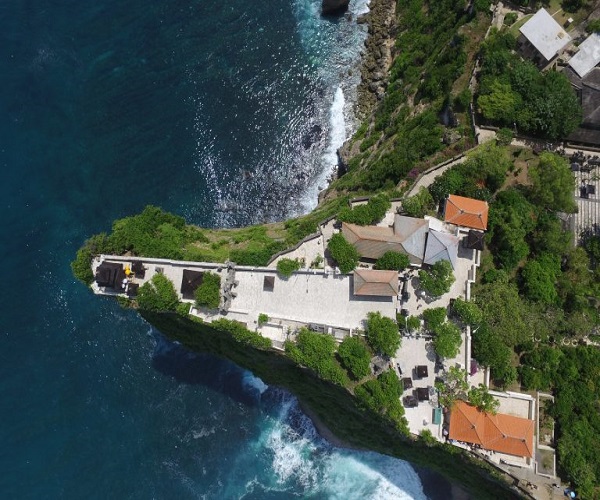
What sets Uluwatu Temple completely apart from other traditional Balinese landmarks is its unique physical layout and defensive positioning. While standard island shrines face west or south, this cliffside temple faces directly east toward the morning sun. The complex layout strictly adapts the traditional Tri Mandala design concept. This system divides the sacred land into three tapering zones that shrink toward the inner core.
- The Outer Courtyard : Jaba Area serves as the initial entry boundary. This wide space measures 13.25 meters long by 12.43 meters wide.
- The Middle Courtyard : Jaba Tengah functions as the central transition zone. This structural area measures 35.54 meters long by 9.20 meters wide.
- The Innermost Sanctuary : Jeroan marks the holiest zone. This narrow interior space measures 28.30 meters long by 8.10 meters wide.
The serpentine stone pathway leading up to this inner sanctuary is heavily fortified by concrete safety walls. These boundaries run along the edge of the precipice to protect visitors from the steep drop. Walking the full length of this pathway takes about an hour, offering several fenced lookout points to watch the heavy surf crash below. The surrounding environment is deeply shaped by a small, dense forest standing at the front gates that acts as a natural green shield. Local spiritual beliefs hold that the resident macaque monkeys are divine guardians tasked with protecting the inner grounds from negative energies and malevolent sea spirits.


Sacred Ceremonies and Spiritual Significance
The complex remains a deeply active place of worship where ancient spiritual traditions are flawlessly preserved by local communities. The Piodalan—the grand temple anniversary celebration that commemorates its original consecration—is held every six months according to the traditional 210-day Balinese Pawukon calendar cycle, specifically falling on the auspicious day of Anggara Kasih in the week of Medangsia. This massive festival typically lasts for three continuous days, drawing tens of thousands of devout Hindu pilgrims from all over the island who dress in elegant, pristine white ceremonial attire to pray together.
The spiritual core of the temple honors the supreme unity of divine forces:
- The Trimurti Unity: Balinese Hindus firmly believe that the three supreme cosmic powers of Brahma (the Creator), Vishnu (the Sustainer), and Shiva (the Dissolver) merge into one single entity within this shrine.
- Worship of Shiva Rudra: This cosmic unity makes the site the primary seat for honoring Shiva Rudra, the deity who guards the balance of all universal elements, weather cycles, and life forces.
- Coastal Protection: In addition to individual blessings, the temple is spiritually dedicated to acting as a powerful macro-guardian that shields the entire island from destructive ocean energies and negative sea spirits.
- Royal Patronage: The complex structural upkeep and festival organization are strictly managed by the royal family of Jro Kuta from Denpasar, who serve as the traditional patrons ensuring the sacred rituals continue seamlessly for generations to come.
On-Site Visitor Amenities
The complex features modern, highly functional tourist amenities designed to ensure visitor comfort throughout the evening. The facilities at the site include:
- Expansive Parking Zone: A massive paved parking area accommodates private cars and large tour buses without risk of running out of spaces.
- Accessible Restrooms: Well-maintained public toilet facilities stand near both the main entrance gates and the exit pathways.
- Local Snack Stalls: Several small shops sell refreshing drinks, light snacks, and cold soft drinks to travelers exploring the grounds.
- Complimentary Ceremonial Attire: A traditional sarong and waist sash are provided free of charge at the entry gate, fully included with the standard entry ticket.
- Nearby Accommodations: A wide range of luxury resorts, private villas, and local guesthouses line the surrounding Pecatu cliffs for guests staying overnight.
Essential Travel Tips for Visitors
Visiting this ancient sea temple is a signature cultural highlight of a Bali vacation. The combination of historical architecture and a panoramic ocean horizon creates an unforgettable setting. To maximize your evening, keep this practical traveler guide in mind:
- Transportation: Independent driving along winding cliff roads can be challenging. Booking a private car with a personal driver or choosing a half-day sunset excursion simplifies travel logistics. Standard hotel pickup times begin around 14:00 from Ubud and 15:00 from Kuta to beat peak traffic.
- Wildlife Management: The surrounding forest is home to hundreds of clever macaque monkeys. Visitors should secure loose personal belongings—such as sunglasses, hats, jewelry, and smartphones—inside a zipped bag. Avoid carrying loose food or drinks, as the animals will approach to claim them.
- Sunset Planning: To secure an unobstructed view of the sun dropping into the sea, plan to arrive at the cliffside paths early. Give yourself extra travel time to account for late afternoon traffic delays on the single-lane roads leading into Pecatu.
- Kecak Ticket Timing: The traditional dance performance takes place at the open-air theater from 18:00 to 19:00 daily. Because seating limits are strict, ticket lines often close by 17:30 as the show sells out fast. Arrive early to secure your spot before walking the temple paths.
- Jimbaran Seafood Dinner: After the fire performance ends, the traditional route continues down to the nearby shores of Jimbaran Beach. Travelers can wind down the evening with a fresh seafood dinner at candlelit tables set directly on the sand.
The Cliffside Kecak and Fire Dance Performance
Staging a traditional Kecak and Fire Dance right on the cliff edge creates an incredible theatrical experience. The open-air amphitheater sits directly adjacent to the main shrines, offering an unobstructed viewpoint over the ocean horizon. This unique positioning allows viewers to watch the vibrant sky change colors while the performance unfolds.
The dramatic show lasts for exactly one hour, utilizing a live, human vocal orchestra of over 50 men instead of instruments. The fast-paced choreography brings the ancient Ramayana epic to life, following the monkey warrior Hanuman on his quest to rescue Goddess Sita from the demon King Ravana. The performance blends intense fire stunts with lighthearted comedic breaks, making it highly entertaining for international audiences.
Cultural Etiquette and Sacred Dress Code
As a highly sacred Hindu site, visitors must follow traditional temple etiquette rules. Both men and women are required to cover their knees using a traditional sarong and tie a ceremonial sash around the waist before crossing into the courtyards. These items are loaned out at the main ticket counter and must be returned at the exit gates.
To maintain spiritual respect inside the active holy place, visitors must strictly avoid the following actions:
- Interrupting Prayers: Never step in front of, stand over, or take close-up photos of local devotees who are actively praying at the inner shrines.
- Stepping on Offerings: Watch your step along the stone pathways to avoid treading on Canang Sari. These small, hand-woven palm-leaf baskets contain fresh flowers, candy, and incense tokens meant for the local spirits.
- Provoking Wildlife: Keep a respectful distance from the monkeys. Do not tease, yell at, or attempt to pet the animals, as they can become protective and aggressive if they feel cornered.
- Respecting Sacred Space: Remember that the entire cliffside complex is a foundational house of worship. Behaving quietly and respectfully ensures a peaceful, enlightening experience for both travelers and local worshipers.
Coastal Wildlife and Resident Long-Tailed Macaques
The forested area wrapping around the cliff edge serves as a natural sanctuary for native long-tailed macaques (Macaca fascicularis). This species is identical to the primates protected across the island at the Ubud, Sangeh, and Alas Kedaton Monkey Forests. Local spiritual beliefs hold that these native residents are divine guardians tasked with protecting the sacred inner grounds from negative elements.
To ensure travelers can explore the pathways safely without disruptions, the complex caretakers manage the wildlife through structured routines:
- Scheduled Daily Feeding: Shrines administrators feed the troops on a strict morning, afternoon, and evening schedule so they remain well-nourished.
- Continuous Corner Security: Dedicated local staff stand stationed along every walkway corner to watch the animals and assist guests during their walks.
- Natural Instinct Awareness: While the animals are looked after, they remain wild creatures driven by natural instincts. If they spot loose food, they will immediately approach to claim it.
Practical Primate Safety Guidelines
Observing the resident monkeys adds a highly entertaining element to your coastal excursion. However, because animals can act unpredictably if they feel cornered or spot objects of interest, keeping these practical safety guidelines in mind is essential for a fun experience:
- Secure Small Personal Items: The native macaques are highly clever and regularly grab small items like sunglasses, hats, jewelry, and smartphones. Keep these belongings tucked safely away inside a zipped bag before stepping past the gates. If an animal takes an item, do not fight to retrieve it; signal a nearby staff member who can safely swap the item for a food token.
- Hide Loose Food and Drinks: Never carry open snacks, water bottles, or plastic grocery bags along the cliff trails. The smell or sound of plastic immediately attracts the troops, who will approach aggressively to claim the items.
- Maintain Respectful Distance: The primates look adorable but will act in self-defense if they feel threatened. Avoid direct eye contact, shouting, or teasing the animals, and let them play undisturbed along the paths.
Curated Afternoon Excursions and Final Thoughts
To help you discover this magnificent sea temple without managing driving logistics, we offer professional and highly affordable private tour itineraries tailored to your holiday schedule. The Half Day Uluwatu Sunset Tour focuses entirely on the cultural and scenic highlights of the southern coast. Your private driver picks you up from your hotel lobby in the afternoon, traveling directly to the 70-meter-high cliffs to explore the ancient shrines. At 18:00, you will watch the spellbinding one-hour Kecak and Fire Dance performance as the sun dips into the sea. The evening concludes at Jimbaran Beach, where you can unwind with a fresh seafood or vegetarian dinner at candlelit tables set right on the sand before a comfortable transfer back to your resort.
For a more comprehensive option, the Full Day Uluwatu Sunset Tour explores the top tourist attractions across the entire southern peninsula. The morning begins with a visit to the dramatic Water Blow cliff formation to see powerful waves crashing against jagged limestone rocks. Next, you will relax on the white sands of Pandawa Beach before driving to Garuda Wisnu Kencana (GWK) Cultural Park to admire the colossal monument of Lord Vishnu. In the late afternoon, the journey leads directly to the sea temple to experience the panoramic sunset views and the evening fire dance show, with an optional dinner stop at Jimbaran Beach included upon request.
The mesmerizing blend of ancient architecture, playful wildlife, and the fiery colors of the coastal horizon makes this clifftop sanctuary an absolute masterpiece of natural and cultural beauty. Whether you choose to explore the paths independently or prefer the seamless luxury of a curated private excursion, this legendary sea temple promises to leave a profound impression on your heart. Do not miss out on experiencing one of the world's most spectacular sunset views during your vacation. We invite you to review our flexible itinerary choices, select the ideal plan that fits your holiday schedule, and get in touch with Bali Tour team today to map out your perfect southern coast escape.
Planning a trip to experience the culture of the island?
Immerse yourself in authentic Balinese heritage with our professional private transportation and custom tour itineraries.
FAQs: Uluwatu Temple Guide
The best time to visit is in the late afternoon between 16:30 and 17:00. This timing allows you to walk the scenic cliffside paths comfortably before the spectacular sunset begins.
The peak sunset window typically begins around 18:15 and finishes by 18:30. The vibrant reddish twilight glow usually lasts for another 15 minutes after the sun dips below the ocean horizon.
Yes, because it is an active Hindu holy place, visitors must dress respectfully. Both men and women must cover their knees with a traditional sarong and tie a ceremonial sash around the waist, which are provided for free at the ticket counter.
The resident long-tailed macaques are generally safe but highly mischievous. To avoid issues, keep small personal items like sunglasses, smartphones, and hats inside a zipped bag, and never carry loose food or drinks along the trails.
The traditional Kecak and Fire Dance performance runs daily from 18:00 to 19:00 at the adjacent cliffside theater stage. Because tickets sell out fast, it is highly recommended to line up for show access before 17:30.
No public transportation services travel to this remote southern peninsula. Finding a spontaneous taxi or ride-sharing car back to town after dark can be very difficult, so booking a private car charter or an organized afternoon tour is recommended.