Beji Temple Sangsit
Guide to Visiting Beji Temple Sangsit: The Unique Carvings of Singaraja, North Bali
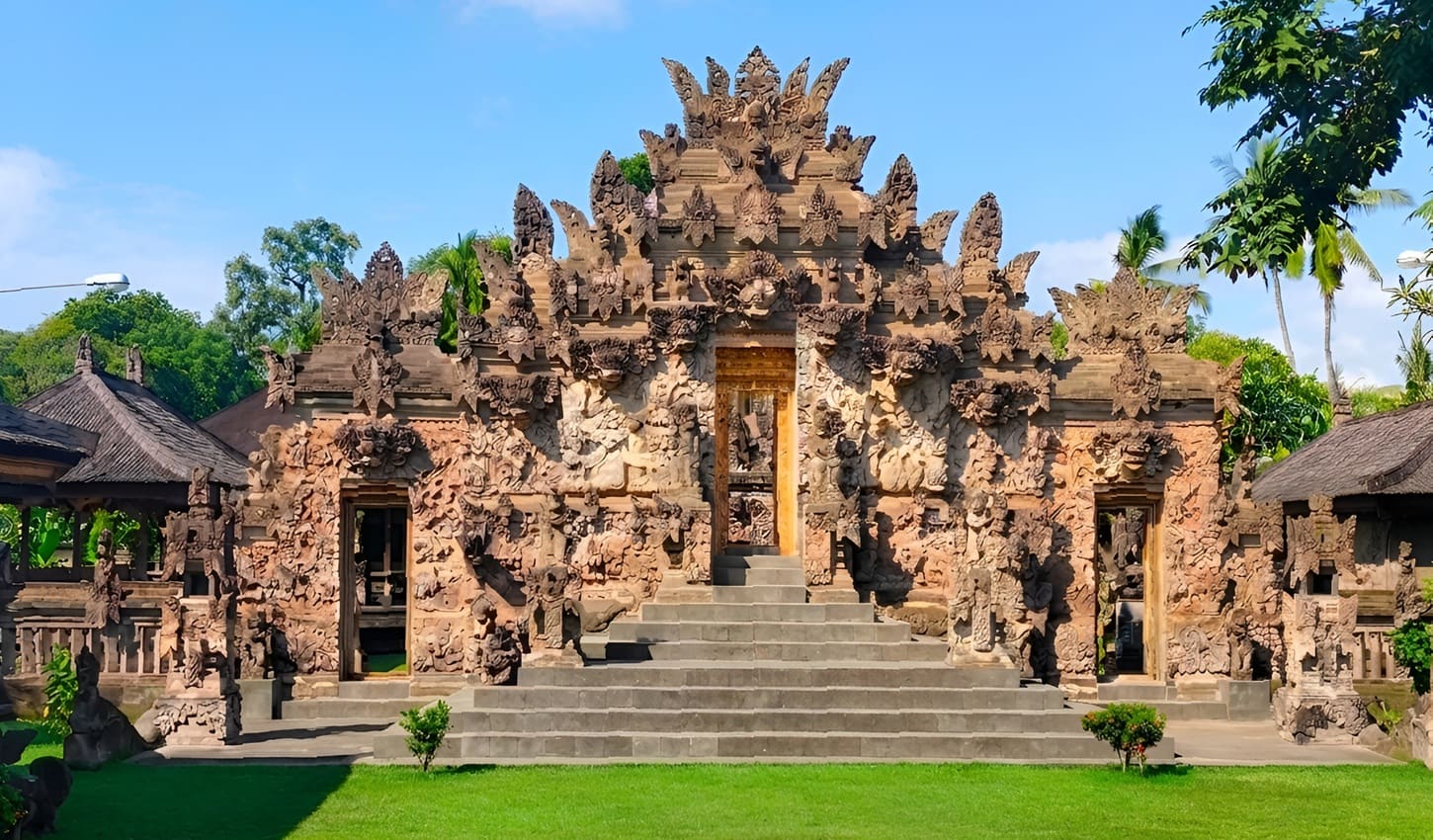
Most people who visit Bali only see the famous temples located across the popular southern coast. While those structures are beautiful, they use a dark, heavy volcanic stone that creates a very serious, traditional look. If you travel over the mountains to the north side of the island, you will discover a completely different architectural style. For modern travelers, Beji Temple Sangsit is a must-see.
Located just a short drive from the old coast, Beji Temple in Singaraja is one of the most beautiful and detailed landmarks in North Bali. If you are planning a trip to this northern region, spending some time exploring this historic sacred site is highly recommended. This comprehensive guide will explain the history, the art, and everything you need to know before visiting. The main thing making this stunning temple stand out is the unique type of stone used to build it. Instead of dark gray volcanic rock, the builders used a soft, pink-colored sandstone found in local river valleys.
Because this pink stone is soft and easy to cut, the artists developed a very unique style for Bali Beji Temple. First, they hated leaving empty spaces, so every single wall, pillar, and corner is covered in carvings of flowers, leaves, and vines. Second, the soft stone allowed carvers to make flowing, winding lines that look like a wild jungle instead of rigid geometric shapes. Finally, the talented local artists had total creative freedom, meaning they easily carved everyday things, old folk tales, and funny pictures of the very first foreign visitors who safely arrived during the historic colonial era.
If you visit Beji Temple Sangsit, here's what you need to know
- The History of Beji Temple Sangsit
- The Location of Beji Temple Sangsit
- Why the Architecture of Beji Temple Sangsit is Different
- Built for Water and Rice Farmers: The Meaning of a Pura Subak
- Walking Through the Temple: The Three Areas
- Summary: Why You Should Visit Beji Temple Sangsit
The History of Beji Temple Sangsit
The historical roots of Beji Temple Sangsit date back to around the 15th century, during the peak of the ancient Majapahit migration to Bali. Unlike the royal state temples built by wealthy kings down south, this sacred landmark was created from the ground up by local working-class farming families. The word "Beji" means a purification site or water source, which explains why the founders chose a location directly over a natural underground aquifer to build their sanctuary. It served as a vital community space where early agricultural workers organized their shared water channels.
Over the centuries, the structure underwent significant rebuilding, most notably during the early 20th century under the guidance of passionate local artisan guilds. Because northern Bali was the main entry point for international trade and colonial administration, the temple's history became intertwined with outside influences. The local carvers used their craft to record these major historical shifts, adding playful depictions of foreign visitors right onto the stone walls. This clever integration shows that the historic Beji Temple in Singaraja was never a static monument, but a living diary of the island's changing cultural landscape.
The Location of Beji Temple Sangsit
Finding Beji Temple Sangsit is straightforward, as it sits in the quiet coastal village of Sangsit within the Sawan district of Buleleng Regency. If you are staying in the popular northern beach town of Lovina, the scenic drive takes roughly 20 to 25 minutes heading straight east along the main coastal highway. For travelers departing from the heart of downtown Singaraja, the journey is even shorter, requiring just a 10-to-15-minute car or scooter ride to reach the front gates of this stunning Bali Beji Temple.
Because the site is located far away from the busy, high-traffic tourist hubs of southern Bali, the surrounding neighborhood retains a peaceful and authentic atmosphere. The temple itself is tucked just slightly off the main regional road, making it an easy and relaxing stop during a day trip through northern Bali. Clear roadside signs help guide independent drivers directly to the entrance parking lot, allowing you to seamlessly add a visit to Beji Temple in Singaraja alongside nearby attractions like local waterfalls or coastal markets.
Why the Architecture of Beji Temple Sangsit is Different
The main thing making Beji Temple in Singaraja stand out from other religious sites is the specific type of stone used to build it. Instead of using the dark gray volcanic rock common in the south, the builders used a soft, pink-colored sandstone found in the local river valleys of northern Bali. This beautiful material completely transformed the appearance of the entire temple grounds. The warm pink tones create a welcoming and peaceful atmosphere that you cannot find anywhere else on the island, making it highly unique for global travelers.
Because this unique pink stone is soft and very easy to cut, the historical artists developed a beautiful, fluid style for Bali Beji Temple. Here is a detailed look at what makes their master stonework so special. The local carvers completely abandoned rigid geometric lines to focus on flowing shapes that look like a living jungle. Every single wall, pillar, entry gateway, and corner is fully covered in dense carvings of tropical flowers, large leaves, and twisting vines, ensuring that absolutely no empty spaces remain across the sacred stone structures.
- No Empty Spaces: The local artists did not like leaving any part of the temple walls blank. Every single wall, pillar, staircase, and corner is fully covered in dense carvings of tropical flowers, thick leaves, and twisting vines.
- Curving and Lifelike Shapes: In southern areas, temple carvings are often very straight, sharp, and geometric. In the north, the soft sandstone allowed the carvers to make flowing, winding lines that look like an organic, wild jungle growing directly out of the stone.
- Fun and Real-Life Stories: The artists who worked on Beji Temple Sangsit had a massive amount of creative freedom. Along with traditional holy statues of gods and demons, they also carved everyday things, local folk tales, and funny pictures of the very first foreign visitors who came to the island.
Built for Water and Rice Farmers: The Meaning of a Pura Subak
Every sacred place in Bali has a unique social role, and the historic Beji Temple Sangsit was built for an essential purpose. It is structurally classified as a Pura Subak. The Subak is the traditional Balinese farming cooperative that democratically manages and shares precious irrigation water among local rice fields. Because the northern coast of the island is naturally much hotter and drier than the rainy southern mountains, getting water to the crops was always a difficult challenge. Local agricultural families built this beautiful sanctuary to pray for rich soil.
The ancient temple complex sits directly on top of a vital underground water source. It remains a peaceful space where local farming families gather to say thank you to Dewi Sri, the beloved Hindu goddess of rice, fertility, and agriculture. When you visit this beautiful site, you are stepping into a living monument that has served as the physical and spiritual heart of this northern farming community for hundreds of years. Seeing this connection helps visitors understand that a great Bali Beji Temple is deeply tied to daily island life.
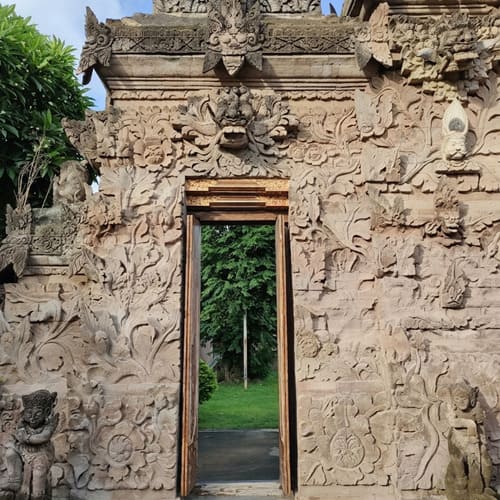
Gate at Beji Temple
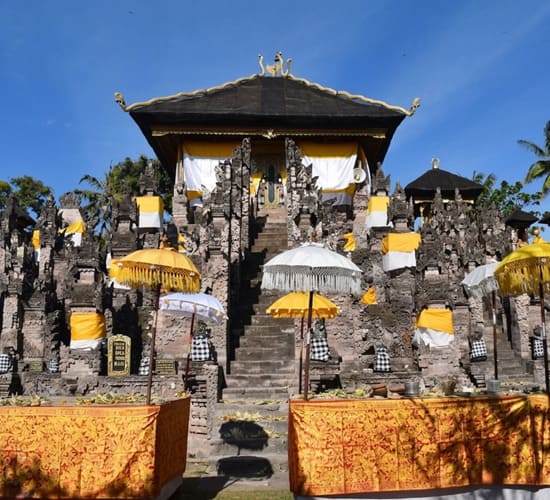
Main Temple at Beji Temple
Walking Through the Temple: The Three Areas
Like most Balinese temples, Beji Temple Sangsit is split into three main courtyards that lead you from the outside world into the most sacred space. This architectural design represents a spiritual journey where your mind moves away from daily stress and enters a quiet, holy atmosphere. The open grounds are carefully divided by large stone walls and beautifully decorated gateways. Each section becomes increasingly sacred as you walk deeper inside the property, allowing visitors to experience a peaceful progression that defines the heart of the beautiful Bali Beji Temple experience.
- The Front Yard (Nista Mandala) : is a large, grassy area with big trees where visitors first arrive. This open space provides a quiet atmosphere to prepare yourself before entering the holy areas of the Bali Beji Temple. Even the outer sandstone walls here are fully covered in beautiful leaf patterns, showing the incredible detail found throughout the grounds.
- The Middle Yard (Madya Mandala): You enter this area through a large split stone gate. The most important structure here is the Kori Agung, which is the giant central gateway leading to the inner yard.This gate has two big stone dragons (nagas) guarding the stairs. Right above the doorway, there is a giant, scary stone face called Bhoma. In Balinese culture, Bhoma is a spirit of nature that protects the temple by scaring away bad thoughts and evil spirits.
Hidden Detail: The Dutch MusiciansIf you look closely at the walls around this middle gate, you can find a fun piece of history. The artists carved pictures of Dutch colonial men into the stone. One man is holding a guitar, and another is playing a traditional string instrument.Since Singaraja was the main base for the Dutch in Bali during the late 1800s and early 1900s, the local carvers included them in the walls. It was a way to record the history of the changing world around them, added with a bit of local humor. - The Inner Yard (Utama Mandala) is the most sacred part of the temple containing the main shrines where people pray. The most decorated shrine belongs to the rice goddess, Dewi Sri. The steps and platforms here feature incredibly detailed statues telling stories from famous ancient regular legends, completing your spiritual journey through the beautiful Beji Temple in Singaraja.
Summary: Why You Should Visit Beji Temple Sangsit
The historic Beji Temple Sangsit is an exceptional stopover for anyone who deeply loves ancient art, regional history, or travel photography. Because it takes less than an hour to fully walk through and see everything within the complex, it provides an efficient yet highly intimate look into the unique, expressive culture of North Bali without the large tourist crowds. You can easily combine an afternoon visit here with a scenic day trip to nearby tropical waterfalls or the quiet black sand beaches of Lovina, making it the perfect addition to your northern itinerary.